Share the idea?

/
Electrical Monitoring Devices
Process
/
7 Expert Tips for Choosing the Suitable Smart Energy Monitor inTuya IoT Ecosystem
7 Expert Tips for Choosing the Suitable Smart Energy Monitor inTuya IoT Ecosystem
Monitoring energy usage has become increasingly important in today’s world, both for households and businesses, which leads to significant cost savings and a reduced environmental footprint. Smart energy monitors provide real-time insights and are seamlessly connected with other smart devices for further automation within an IoT platform.
This blog will guide you through selecting the right smart energy monitor within one of the top smart IoT platforms, the Tuya ecosystem. With many energy monitoring device options available, it can be challenging to determine which device best suits your needs.
By the end, you’ll understand the types of monitors, their distinctive features, and how to select the one that fits your requirements.
I.Energy Management with Tuya
Tuya is a leading IoT platform that provides comprehensive smart home solutions. It offers robust capabilities for device connectivity, control, and automation, allowing users to manage various smart devices through a unified platform. With Tuya, integrating smart energy monitors into your smart home system becomes seamless and efficient.
The Tuya ecosystem supports a wide variety of energy monitoring devices, catering to different needs and preferences. These include traditional meters, plug-in monitors, relay switch monitors, monitors with split-core CTs and even integrated compact energy sensors. Each type offers unique features and benefits.
II. 7 Expert Tips on Choosing Your Smart Energy Monitor
Choosing the right type of smart energy monitor within the Tuya IoT ecosystem involves considering several key factors. Here are six expert tips to guide you:
1. Evaluate Connectivity Options
Smart energy monitors with the Tuya platform are equipped with various communication options, catering to different scenarios and applications. The most popular connectivity protocols for home use include Wi-Fi, Zigbee, Bluetooth etc. Creating a seamless smart home involves thoughtful protocol considerations. Features covering range, data rate, power consumption, device capacity etc. may differ among protocols.
2. Prioritize Real-Time Monitoring
Real-time monitoring provides instant visibility into energy consumption patterns, allowing users to promptly identify spikes in usage. Smart automation among various smart devices such as Dynamic Load Balancing relies on up-to-the-moment data to trigger actions like adjusting EV charging power based on current energy consumption levels.
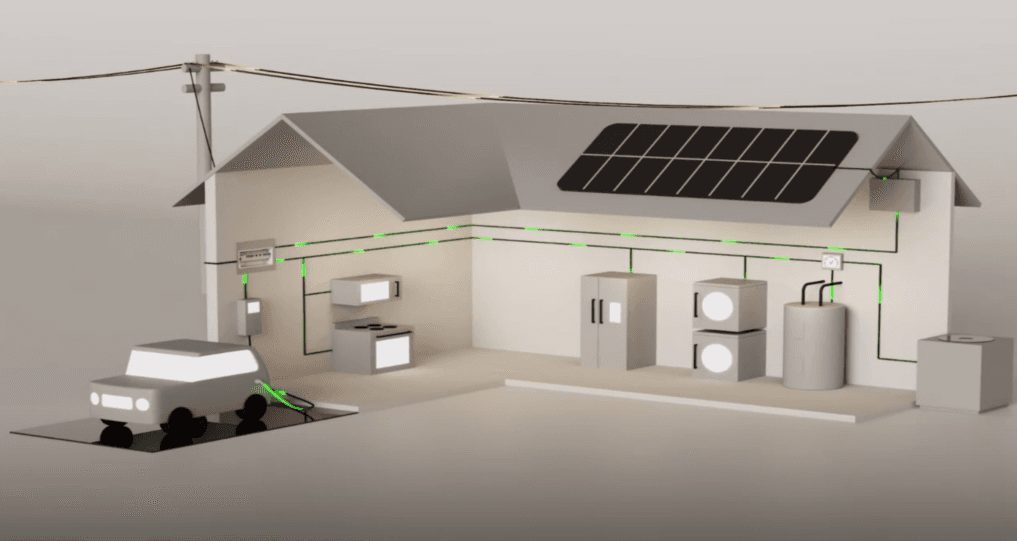
Dynamic Load Balancing & Zero Grid Export
Choosing smart energy monitors that allow you to customize reporting intervals is crucial for realizing real-time monitoring and smart automation. This synchronization ensures that energy-optimizing actions are timely and responsive.
3. Ensure High Accuracy
Many industries and regulatory bodies require precise energy usage data for compliance with standards and regulations related to energy efficiency and environmental impact. For residential uses, accurate monitoring provides reliable insights into energy consumption patterns over time, facilitating better decision-making for energy efficiency improvements.
Thus, selecting monitors with high accuracy is of great importance for both industrial and residential applications. Smart energy monitors like Bituo Technik’s SPM and SDM are featured with Class 1 Accuracy (IEC61557-12), with a ratio error of no more than 1%, making them a strong fit for energy management in homes, buildings, industries and infrastructures.
4. Consider Measurement & Installation Requirements
When choosing smart energy monitors within the Tuya IoT ecosystem, understanding different types of measurement is crucial, as it offers different safety protection levels.
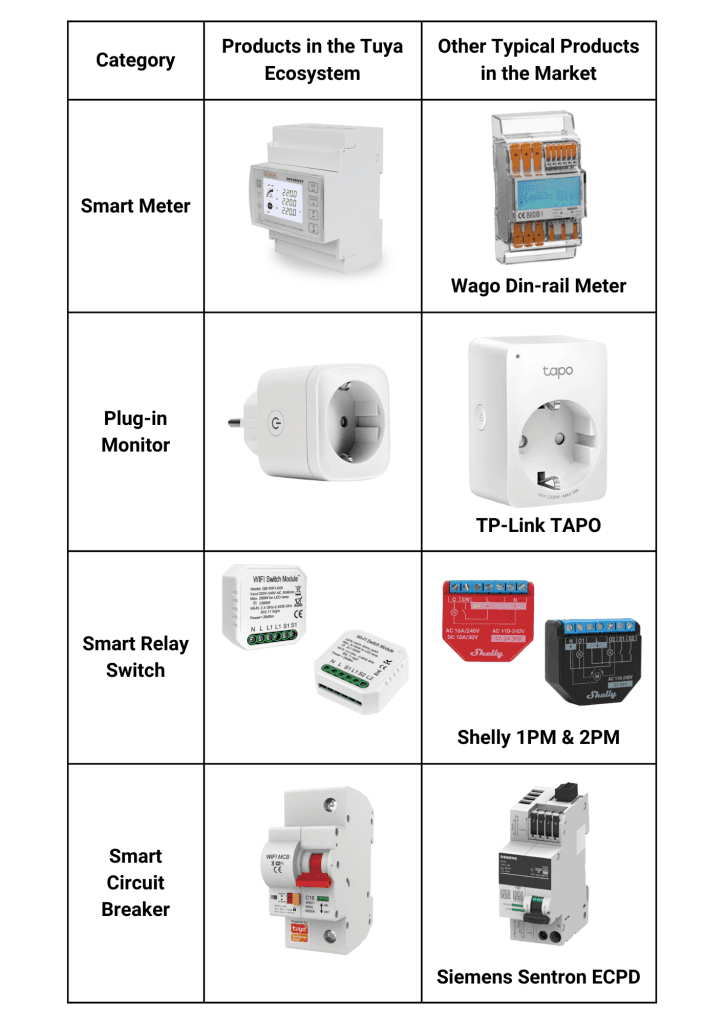
Direct measurement involves monitors that directly connect to electrical outlets or appliances. This method is exemplified by smart circuit breakers, plug-in monitors, and energy-monitoring relay switches. Indirect measurement, in contrast, utilizes devices like current transformers (CTs) that clamp around electrical wires to measure energy flow indirectly. This method reduces the possibility of fire caused by direct current bypass.
In terms of CTs, there are Split-core CTs and Closed-core CT that make the installation complexity different. Split-core CTs have a design that allows them to open up, making it easy to clamp around existing cables. Solid-core CTs offer a robust and cost-effective design, ensuring high accuracy even in challenging conditions like cold and humid environments. However, installation requires disconnecting the cable to pass it through the sensor’s center hole.
Considering the current measurement types and CT forms ensures compatibility with your installation environment and aligns with safety and operational requirements.
5. Compare Product Designs
As we mentioned above, different types of smart energy monitors come with very different structures and appearance designs. It’s worth noticing that some product designs may lead to potential electrical danger. For example, close bare screw connectors exposed to touches during installation are not as safe as a compact product design that ensures installation safety.
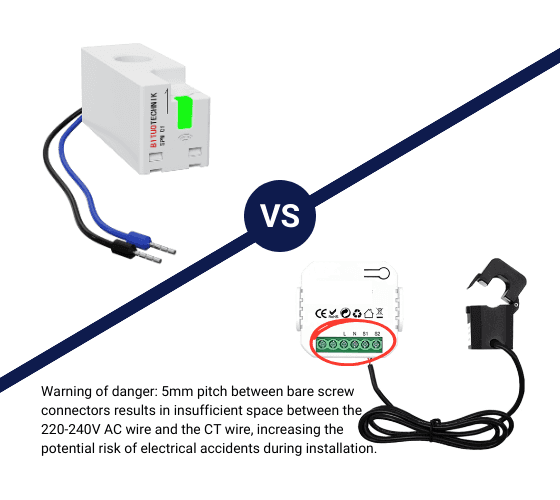
Compact Energy Sensor Design v.s. Close Bare Screw Connectors
6. Check Data Storage and Analysis Features
When selecting smart energy monitors within the Tuya IoT ecosystem, it’s essential to check their data storage and analysis capabilities. Opt for devices that offer robust historical data storage, allowing for thorough analysis of past energy consumption patterns.
Additionally, advanced analysis features within the Tuya platform, such as bi-directional energy displays, are available for a limited range of products, which ensures more comprehensive monitoring capabilities.
In the Tuya ecosystem, a “physical model” refers to the cloud-based data model developed on the Tuya Developer Platform for physical devices. It primarily defines the functional attributes, action capabilities, and events of a product device, representing its functionalities in the cloud. Products for electrical monitoring within the Tuya ecosystem utilize different physical models, each equipped with distinct software functionalities. For instance, the physical models of energy meters or circuit breakers are more complex compared to smart switches or sockets. Features like bi-directional energy monitoring data display require sophisticated physical models for development and implementation in the cloud environment.
7. Balance Cost with Features
Consideration should be given to monitors that suit your needs, and also offer a balance between cost-effectiveness and functionality, ensuring that your investment delivers maximum value. Be sure to evaluate the pricing across different tiers and the corresponding features available.
III.Types of Smart Energy Monitors and Top Products
In the Tuya IoT ecosystem, a diverse range of smart energy monitors is available to cater to various energy management needs. These devices differ in their measurement methods, installation requirements, functionalities etc., making it essential to choose the right type for your specific application. Below, we categorize the different types of smart energy monitors in the Tuya ecosystem and highlight some of the top products in each category, providing a comprehensive overview to help you make an informed decision.
1. Smart Monitors with Direct Current Measurement
2. Smart Monitors with Indirect Current Measurement
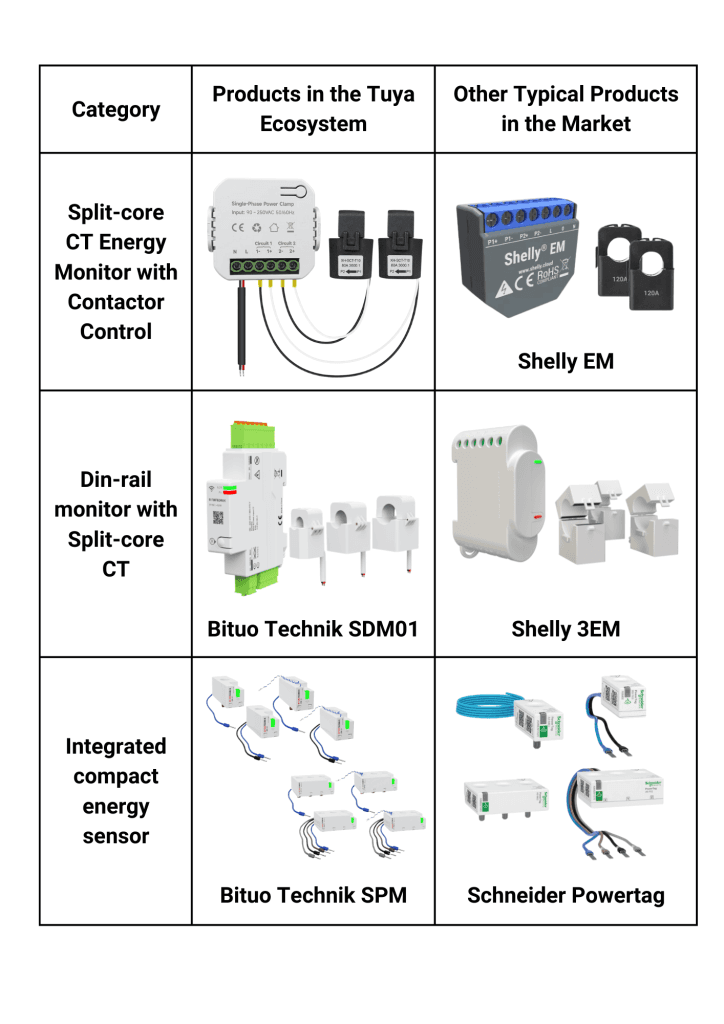
Bituo Technik’s products within the Tuya ecosystem stand out in their categories due to their advanced product designs and performance. The SDM series, a DIN-rail monitor with split-core CT, not only offers precise and reliable energy monitoring but also supports a variety of communication options, including Wi-Fi, Zigbee, Modbus, and even hybrid communication with both wired and wireless options.
Similarly, the SPM series, an integrated compact energy sensor, stands out for its high accuracy and compact design, making it ideal for space-constrained environments. Like the SDM series, it supports multiple communication protocols, ensuring robust connectivity and real-time data monitoring.
In addition, Bituo Technik offers more customization services to meet specific user needs, in terms of communication options, private cloud storage, maximum current etc. providing tailored solutions that typical market products may not. Coupled with competitive pricing, Bituo Technik’s SPM and SDM are highly recognized for being both well-performing and cost-effective.
IV. Installation and Setup within the Tuya Ecosystem
As mentioned earlier, the installation methods for different types of smart energy monitors vary. Below, we illustrate the installation of Bituo Technik’s SPM and SDM in a consumer unit, showcasing the setup for integrated compact energy sensors and DIN-rail monitors with split-core CTs.
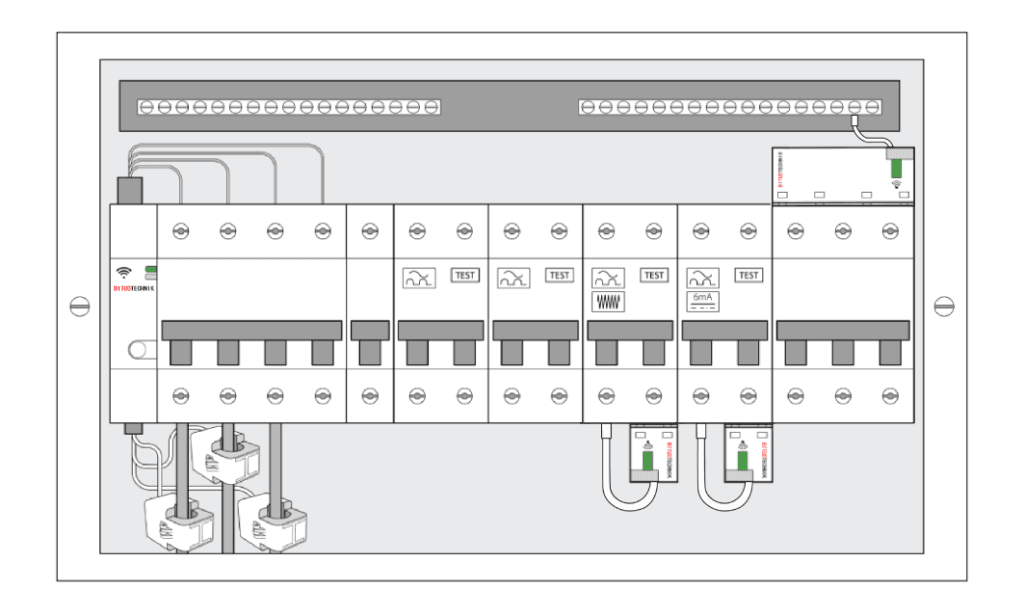
SDM and SPM installed in a Consumer Unit
In the consumer unit example, an SDM set monitors the main circuit, while two SPM01 units monitor two single-phase branches and one SPM02 unit is installed for three-phase branch monitoring. This setup ensures comprehensive energy monitoring across different circuit types. Users can install the appropriate number of devices based on their specific needs.
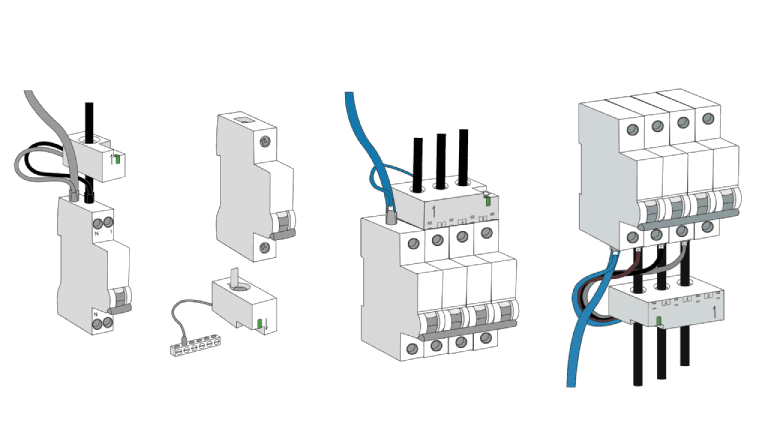
Wiring of SPM
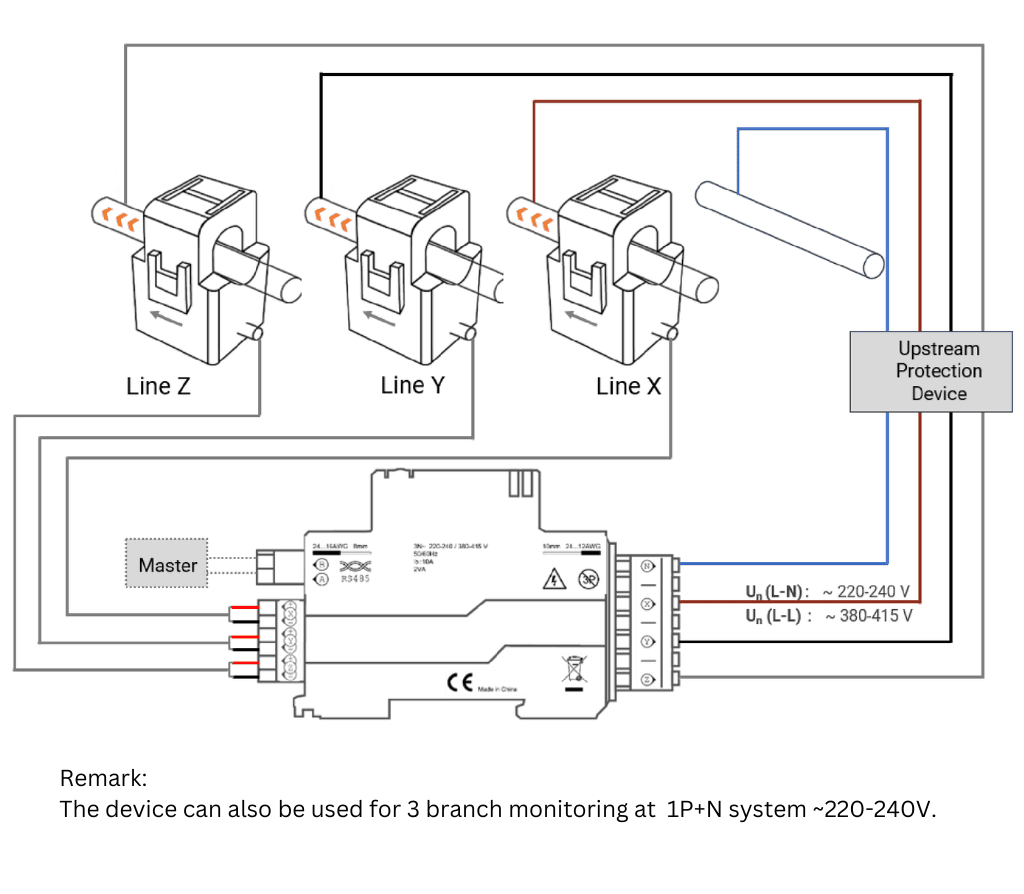
Wiring of SDM
Compared to the SDM, the SPM series takes no space on the DIN rail, contributing to a neater wiring arrangement. Both the SPM and SDM measure current indirectly using CTs, ensuring safe installation and reliable long-term use.
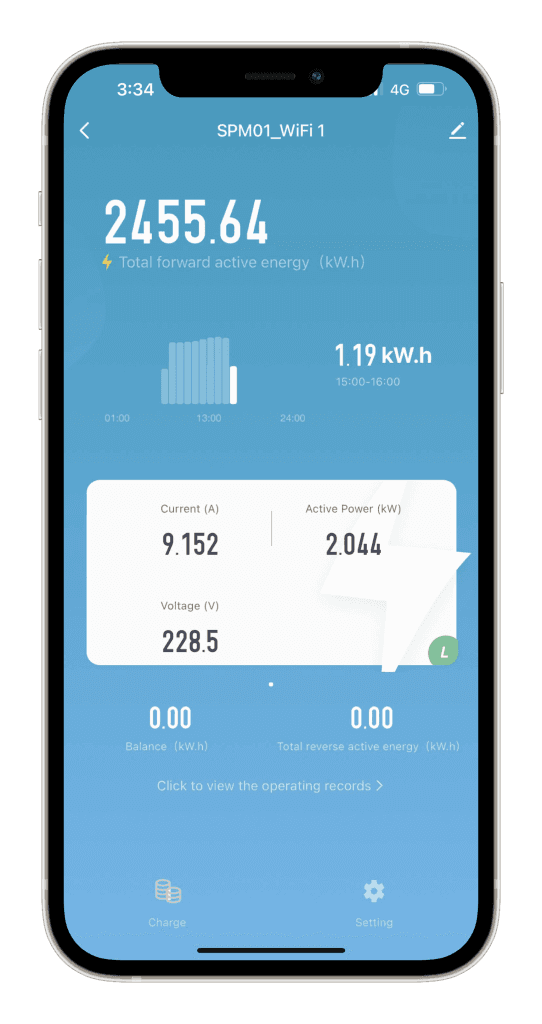
Bituo Technik’s SPM with Tuya Smart Life
Products within the Tuya ecosystem benefit from Tuya’s cloud services for data storage and processing. For detailed cloud pairing settings, refer to the SPM01 pairing guide as an example. This guide offers a step-by-step process to seamlessly integrate the device with Tuya’s cloud platform, enabling energy monitoring and customizable alarm functions via the Smart Life app.
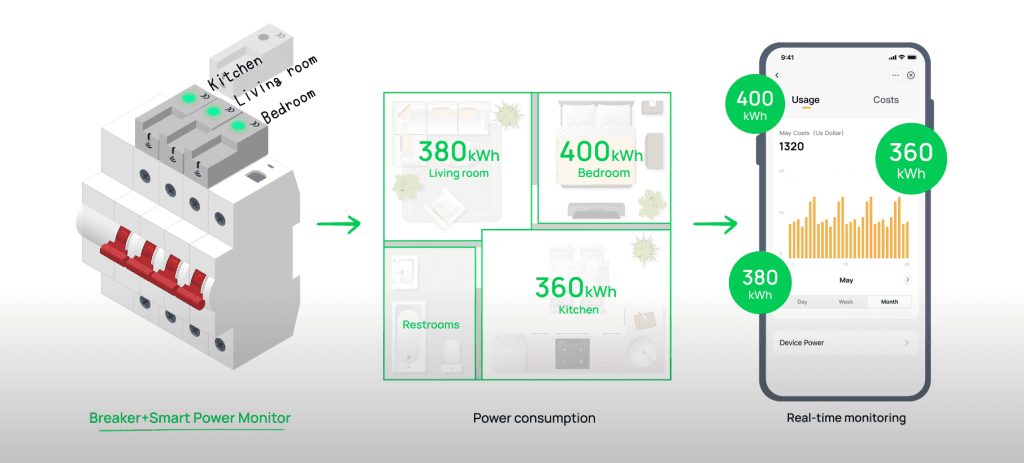
Bituo Technik’s SPM with Tuya Smart Energy Saving Dashboard
Together with Tuya’s smart energy-saving dashboard, SPM helps visualize power consumption by branch or area, providing comprehensive energy monitoring.
V. Why Choose Bituo Smart Energy Monitors for Tuya IoT Solutions
Bituo Technik’s smart energy monitors stand out for their unique features and seamless compatibility with the Tuya IoT platform. Our products offer versatile communication options, including Wi-Fi, Zigbee, and Modbus, along with hybrid wired and wireless solutions. This flexibility ensures they can easily integrate into various smart home and industrial setups. Additionally, Bituo Technik provides extensive customization services, ensuring our devices meet your specific requirements while delivering exceptional value for money.
Bituo Technik is recognized as Tuya’s top recommended partner for energy monitoring solutions. Our products are highly regarded in the industry, backed by certifications and awards for their reliability and performance.
VI. Conclusion
In this guide, we’ve explored the different types of smart energy monitors, their benefits, and 7 tips on how to choose the right one within the Tuya platform. As a reliable, versatile, and cost-effective solution within the Tuya ecosystem, Bituo Technik is determined to provide top-notch energy monitoring products that cater to diverse user needs.