Share the idea?

/
Electrical Monitoring Devices
Process
/
Smart Energy Monitors for Home: Benefits Beyond Reducing Energy Bills
Smart Energy Monitors for Home: Benefits Beyond Reducing Energy Bills
Do you know what smart energy monitors are? Are you curious about how smart energy monitor can benefit your home? As energy prices continue to rise and sustainable living becomes a priority for many families, the demand for home energy management systems (HEMS) is increasing. One of the essential components of a HEMS is real-time home energy monitors. In this blog post, we’ll explore the features and benefits of smart home energy monitor for residential applications, and provide tips on what to consider when selecting one for your home.
What is a smart energy monitor?
When it comes to managing home energy consumption, a smart energy monitor is an essential tool to have. This device provides real-time information about how much energy is being used at any given moment, and allows users to track their usage over time. Put simply, a smart home energy monitor is a device that collects and displays live energy data in an easy-to-understand format.
Not only can it provide information about energy usage, but it can also measure other electrical parameters like voltage, current, and power. These measurements can be used as inputs for home energy automation or home energy management systems, making smart home energy monitor an important part of any modern household.
What are the types of smart energy monitors? Where to install them in a home?
Smart energy monitors come in various forms, with the most popular being, smart energy meters, smart energy monitors with meter appearance, smart energy monitors with external current sensors, smart energy sensors, and smart plugs.
1. Smart energy meters:
Smart meters installed at homes are typically owned and used by utilities for billing purposes, and always come together with in-home displays. Although today’s smart meters are capable of providing real-time electrical data compared with traditional electricity meters, they don’t fit well for home energy management and automation.
Firstly, it is complicated for home energy management systems to access those real-time metering data locally. Secondly, their big size makes it difficult to add them to in-door distribution boards (consumer units). Thirdly, their cost is high, because smart meters were originally designed for utilities, rather than homeowners.
2. Smart energy monitors with meter appearance:
Some manufacturers simplified the design of the traditional smart energy meters and added features of Wifi / Zigbee communication. The product cost is much lower than smart energy meters, but their size limits their applications for multi-circuit monitoring at the existing consumer unit.
3. Smart energy monitors with external current sensors:
This form of device typically consists of a controller with a wireless communication module and open-coil current transformers (clamp-on sensors). When they are used for multi-circuit monitoring at existing distribution boards, it is hard to maintain orderly wiring.
4. Smart energy sensors:
The concept of smart energy sensors was first introduced by Schneider Electric with its Powertag series of Zigbee energy sensors in 2018. Thanks to the compact design, they are easy to install under different circumstances. E.g. They can be installed at the main incoming circuit or at circuits feeding big/medium loads and indoor spaces, making it possible to monitor the electricity consumption of different circuits.
The latest milestone of smart energy sensors was brought by Bituo Technik with its SPM01/02 devices in 2022, whose patented technologies facilitate high-power wireless communications, robust EMC performances, and easy integration to any third-party IoT platforms.
5. Smart plugs:
A smart plug is a device that is inserted into electrical socket and with integrated electricity monitoring and remote control. They allow users to track and monitor the energy use of electrical appliances up to 10A. With the continuous decrease in prices of such smart energy-monitoring plugs, it has become more affordable to install multiple smart plugs at home.
To gain a comprehensive understanding of home energy usage and enable energy automation, it is recommended to install smart electricity monitors at both distribution boards (consumer units) and sockets.
The following picture illustrates a three-level home energy monitoring system, covering household monitoring, big/medium load monitoring (individual circuits), and small medium/load monitoring (different appliances).
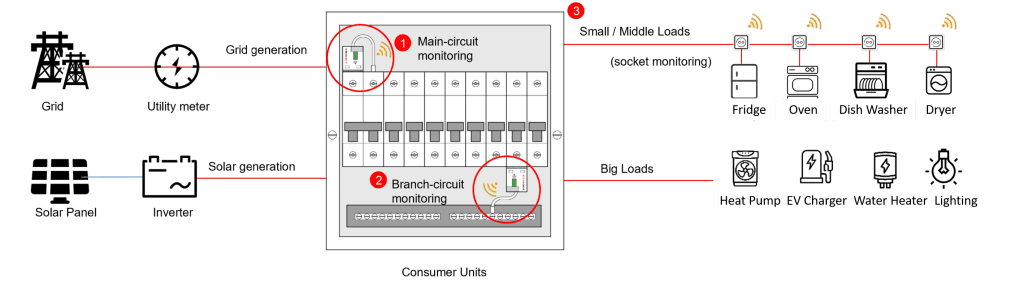
Diagram 1: Three-level Smart Home Energy Monitoring
The displayed energy monitors for circuits monitoring are the up-to-date SPM01/02 smart energy sensors from Bituo Technik. They are the smallest smart energy monitors with Wifi or Zigbee communication and can be installed directly at the bottom or top of circuit breakers – requiring no space at Din-rail.
The SPM01/02 standard variant is seamlessly integrated into the Tuya Smart IoT platform. At the same time, the modular design of the smart energy monitor enables ODM/OEM partners to extend customer-specific IoT platform integration quickly.
What benefits can energy monitors bring to a home?
Smart energy monitors can offer numerous benefits, and the basic one is making home energy use transparent. Our product management team has summarized the most important values added as follows:
1. Improving energy usage awareness (helping reduce energy bills):
While smart energy monitor alone cannot reduce home energy consumption and save energy, they provide valuable and detailed information that can help homeowners understand their energy usage habits and plan for more economic energy use.
The energy efficiency industry agrees that the optimization of energy-using behaviour alone – without the investment of replacing inefficient equipment and appliances- can help reduce 5~10% of energy costs at home and help save money.
2. Facilitating home energy automation:
Open and interconnected smart home hardware and software have made energy automation at home increasingly popular. Smart energy monitors with bi-directional current measurement features are particularly useful for self-generated energy optimization scenarios, while those with Zigbee communication can simplify dynamic load balancing with EV chargers.
3. Strengthening electrical safety:
Smart energy monitor can provide an added layer of protection against property damage and electrical shock. By receiving alerts on their mobile devices about under/over voltage and overload, homeowners can quickly address any abnormal status and potentially extend the lifespan of their home appliances.
What features are important to consider for a smart energy monitor?
When choosing an energy monitor, several features are important to consider. Here are a few key ones:
1. Real-time usage data:
The home energy monitor should be able to provide real-time data on energy consumption, allowing homeowners to see how much energy they are using at any given moment.
2. Data history:
It is also useful to have access to historical data on energy consumption, so homeowners can track patterns and trends over time, which are the basis for analyzing energy usage habits and save energy.
3. Accuracy:
The accuracy of the energy monitor is crucial to ensure that the data provided is reliable and can be used to make informed decisions about power use.
4. Compatibility:
The energy monitor should be compatible with the homeowner’s electrical system and any other devices or software they may be using.
5. Ease of installation and use:
A user-friendly interface and easy installation process are important to ensure that homeowners can get started quickly and easily.
6. Integration:
Integration with other smart home devices and automation systems can add extra value to an energy monitor, such as voice control to switch on and switch off appliances, allowing for more advanced energy management and optimization.
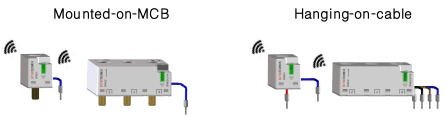
Diagram 2: SPM01/02 Smart Energy Sensors
Bituo Technik’s SPM01/02 are high-precision energy monitoring device that provides trackable real-time data on electricity usage. With its class 1 accuracy of energy measurement, SPM01/02 help homeowners to accurately track their energy consumption and save energy. SPM is designed with a modular structure that allows for easy integration with various IoT platforms.
The standard variant of SPM01/02 is already integrated into the Tuya Smart IoT platform, and it can be quickly extended for ODM/OEM partners. The device also features bi-directional current measurement and alarming messages that inform homeowners about the abnormal status of power supply and consumption.
In conclusion, smart home energy monitor is increasingly becoming an essential tool for homeowners to manage their energy consumption and optimize energy usage behaviour. SPM01/02 play a vital role in the home energy management system and help achieve benefits beyond reducing energy bills.